Shenzhen’s historic trilateral: significance without illusions By Qaiser Nawab
Not every photograph of world leaders deserves to be called historic. The meeting in Shenzhen on November 19 between Chinese President Xi Jinping, Russian President Vladimir Putin and US President Donald Trump probably does.
According to China’s Foreign Ministry, it was the first face-to-face meeting in history bringing together the sitting heads of state of China, Russia and the United States. The meeting took place alongside the APEC Economic Leaders’ Meeting and concluded with a joint “Declaration toward Peace”.
That alone gives the gathering unusual symbolic weight.
China, Russia and the United States are permanent members of the UN Security Council, nuclear-armed powers and major actors in virtually every significant strategic question confronting the international system. Their relations affect Europe, the Middle East, the Korean Peninsula, global energy markets, nuclear stability and international trade.
But history should not be confused with transformation.
One summit cannot erase the substantial disagreements among these three powers. Nor should the Shenzhen meeting be interpreted as the creation of an exclusive directorate entitled to decide the future of other countries.
Its significance lies somewhere more practical: the leaders of three states whose relations have often been marked by distrust have demonstrated that direct strategic dialogue is still possible.
In the present international climate, that is no small development.
Why the meeting matters
The international system has entered a period in which several major crises overlap.
War and instability have returned to regions that directly involve or affect major powers. Nuclear risks are receiving renewed attention. Trade restrictions and sanctions have become common instruments of foreign policy. Artificial intelligence and advanced military technologies are developing faster than many international rules designed to govern them.
Communication among major powers becomes more important under such circumstances, not less.
Chinese officials described the Shenzhen summit as “groundbreaking”. The language is understandable given that the three leaders had never previously met together in this format. Reuters independently reported the unprecedented character of the meeting while noting the significant disagreements that remain among the three governments.
The historical comparison that immediately appeared was Yalta, where Franklin Roosevelt, Winston Churchill and Joseph Stalin met in 1945 to discuss the shape of post-war Europe.
It is not a particularly helpful analogy.
The Kremlin itself rejected comparisons with Yalta before the Shenzhen talks. The world of 2026 is vastly different from 1945. There are nearly 200 sovereign states, powerful regional organisations, a far larger global economy and an established multilateral system centred on the United Nations.
The Shenzhen meeting should therefore be seen not as an attempt by three powers to divide the world, but as an opportunity for them to reduce risks created by their own relationships.
That is a more defensible and useful role.
President Xi framed the issue around four principles: mutual respect, peaceful coexistence, cooperation and dialogue. He also argued for regular high-level exchanges and crisis-communication mechanisms intended to reduce miscalculation and prevent friction from escalating.
This may be the summit’s most important practical idea.
History suggests that major-power crises become particularly dangerous when communication fails. Governments misread military movements, misunderstand political signals or assume hostile intentions where uncertainty exists.
A hotline does not create friendship. But it can prevent an avoidable crisis.
The declaration is modest but meaningful
The joint declaration emerging from Shenzhen is relatively short.
The three presidents committed themselves to strategic stability and international security and supported reforms intended to improve the ability of the United Nations to address global challenges.
They agreed on the importance of stable energy flows and stated an intention to increase supplies of refined petroleum products.
Most importantly from a strategic perspective, all three reaffirmed the principle that a nuclear war cannot be won and must never be fought. They also agreed to pursue dialogue on reducing nuclear risks and preventing nuclear proliferation.
This is not an arms-control treaty.
It contains no warhead limits, verification system or timetable for disarmament. Expectations should therefore remain realistic.
But political declarations have value when they establish principles that can later support more detailed negotiations.
The nuclear dimension is particularly important because the strategic environment is becoming increasingly complicated.
For much of the Cold War, nuclear stability was discussed primarily as a US-Soviet question. China’s growing strategic capabilities mean the future environment will increasingly involve three major nuclear powers rather than two.
Developing mechanisms for dialogue before a crisis occurs is preferable to attempting to construct them during one.
The Shenzhen summit also has an economic dimension.
Xi argued that China, Russia and the United States possess complementary strengths in manufacturing, resources and consumption and should maintain economic cooperation rather than disrupt supply chains. Energy-market stability was identified as another potential area of coordination.
The three economies are profoundly different.
China is a manufacturing and trading powerhouse. Russia is one of the world’s largest producers of energy and natural resources. The United States combines the world’s largest consumer market with immense financial and technological capacity.
Cooperation among them would not eliminate competition, but even limited coordination in energy and trade could have consequences far beyond their borders.
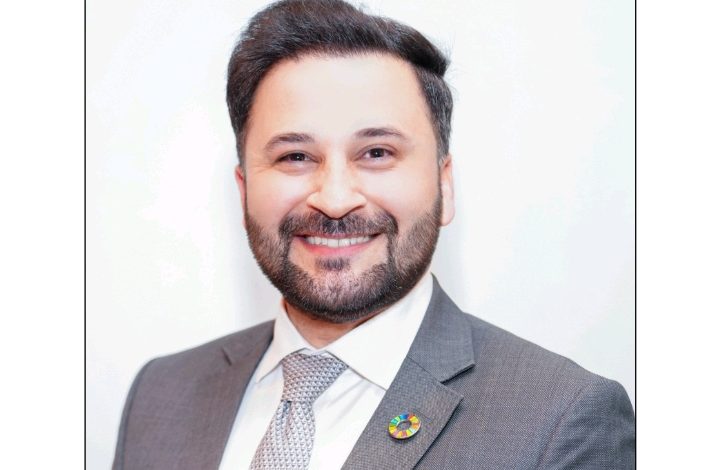
The author is the Chairman of the Belt and Road Initiative for Sustainable Development (BRISD) and can be reached at qaisernawab098@gmail.com