SUSTAINABLE MINING FOR PROSPEROUS PAKISTAN
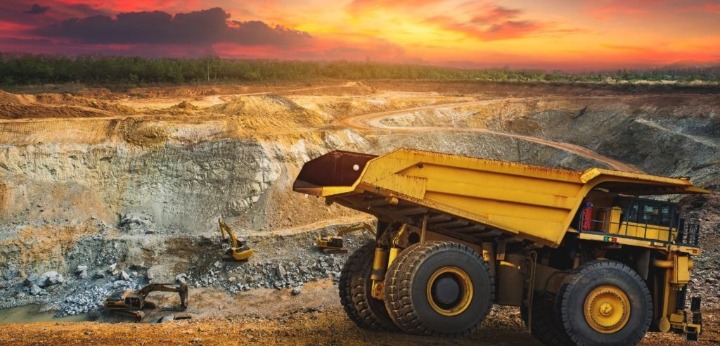
Establishment of “Mineral Development Bank” and “National Scientific Infrastructure for Mineral Resource Development”
Background and Rationale:
In the current geopolitical and economic landscape, Pakistan’s mineral resource potential can provide a firm foundation for economic development, industrial transformation, technological advancement, and human resource development. Realizing this potential, however, requires scientifically driven exploration and mining operations, reliable financial mechanisms, sustained domestic investment, and investor confidence in consistent and transparent policies.
Mineral wealth alone does not guarantee national prosperity. The real opportunity lies in transforming geological resources into responsibly produced minerals, value-added products, skilled employment, competitive industries, and sustainable economic benefits for local communities. Achieving these objectives requires an integrated national strategy that combines scientific knowledge, financial support, modern technology, transparent governance, environmental protection, and domestic mineral processing.
In Pakistan, traditional mining activities have continued for decades, whereas systematic, technology-driven mineral exploration and modern resource assessment have yet to achieve their full potential. Limited access to advanced exploration technologies, inadequate subsurface geological data, shortages of technically skilled manpower, and insufficient financial resources continue to constrain the sector. Consequently, many mineral occurrences remain inadequately evaluated, and potentially viable resources may not progress towards economically feasible and environmentally responsible mining operations.
Pakistan’s minerals-sector reform agenda has highlighted the importance of investment, improved governance, international expertise, and modern technology. The next step is to translate these priorities into a practical and sustainable institutional framework that integrates scientific exploration, transparent mineral governance, environmental safeguards, local investment, and domestic value addition.
Challenges and Local Dynamics of the Mineral Sector:
International experience demonstrates the importance of early-stage geological surveys, public geological data, technical assistance, risk-sharing mechanisms, and access to specialized financial services in developing mineral resources. These interventions help reduce geological uncertainty and enable investors to make better-informed decisions before committing substantial capital.
In developing economies such as Pakistan, establishing an enabling ecosystem for mineral development is particularly important. Although government incentives may attract foreign investment, several structural constraints can limit the effectiveness of these measures, including security challenges in remote mineral-bearing regions, inadequate infrastructure, limited access to modern mining equipment, shortages of trained technical personnel, and uncertainty regarding the continuity and implementation of mineral policies.
These challenges cannot be resolved through financial incentives alone. They require coordinated action to improve access to capital, strengthen technical capabilities, establish reliable geological databases, and build lasting confidence among mine and lease owners, investors, financial institutions, and technical experts.
A practical approach should therefore focus on two complementary pillars:
1. Financial support: Mobilizing domestic capital, institutional investment, and, where feasible, foreign investment to support mineral exploration, resource evaluation, mine development, and responsible production.
2. Scientific and technical support: Generating reliable geological and geophysical data, applying advanced exploration technologies, undertaking mineral resource modelling, and providing qualified technical expertise throughout the mining value chain.
The integration of these two pillars would help reduce investment risks, improve the probability of exploration success, strengthen local entrepreneurship, and create skilled employment opportunities.
Establishment of the Mineral Development Bank of Pakistan (MDBP)
It is proposed that the Government of Pakistan examine the establishment of a Mineral Development Bank of Pakistan (MDBP) as a specialized financial and technical institution dedicated to sustainable mineral resource development.
The proposed institution could draw lessons from the development-finance model historically associated with the Agricultural Development Bank of Pakistan, now known as the Zarai Taraqiati Bank Limited (ZTBL), while adapting its structure and financial instruments to the distinctive risks of mineral exploration and mining.
Unlike conventional commercial lending, mineral development finance must account for geological uncertainty, long exploration timelines, substantial initial capital requirements, commodity-price volatility, infrastructure constraints, and environmental obligations. The MDBP should therefore be designed around appropriate project appraisal, staged financing, technical verification, risk management, and transparent lending criteria.
Its principal objectives could include:
Mobilization of domestic investment:
The bank could facilitate investment by Pakistani individuals, business groups, domestic companies, institutional investors, and overseas Pakistanis. Appropriate mechanisms could also enable participation by eligible international investors in accordance with applicable laws, investment policies, and foreign-exchange regulations.
Financing for mine and lease owners: Eligible mine and lease owners could access financing for geological surveys, exploration drilling, sampling, laboratory analysis, feasibility studies, mine planning, equipment acquisition, safety improvements, and environmentally responsible mining operations. Financing should be released in stages against independently verified technical milestones, legally valid mineral titles, and approved project plans.
Technical due diligence and advisory services: The bank could maintain a panel of qualified geologists, geophysicists, mining engineers, mineral economists, environmental specialists, and financial experts to assess project viability and advise borrowers and investors. This would help ensure that financing decisions are based on credible geological evidence, realistic economic assessments, appropriate engineering designs, and compliance with environmental and social safeguards.
Investment facilitation and risk-sharing: The MDBP could explore partnerships with provincial mineral development departments, geological survey organizations, research institutions, commercial banks, development-finance institutions, and private investors. Subject to feasibility studies and applicable financial regulations, possible instruments could include co-financing, credit guarantees, equipment financing, exploration risk-sharing facilities, and project-preparation support. Public funding should be structured transparently to avoid uncontrolled fiscal exposure and the socialization of unjustified commercial losses.
Confidence-building and employment generation: By connecting mineral titleholders with investors and qualified technical experts, the bank could create a more reliable environment for investment in locally owned mineral projects. Better project preparation and access to appropriate finance could encourage formalization, improve productivity, develop technical skills, and expand employment opportunities in mineral-bearing regions.
Building a Three-Party Mineral Development Partnership
The proposed framework should establish a practical business relationship among three principal stakeholders:
( Mine or lease owners: Providing legally verified mineral rights, local knowledge, access to the project area, and participation in project development.
( Local investors and financial partners: Providing capital, business management, commercial expertise, and investment discipline.
( Qualified technical experts and research institutions: Providing geological and geophysical investigations, mineral resource assessment, laboratory testing, engineering advice, and independent technical verification.
The MDBP could serve as a facilitator of this relationship by providing a structured platform for project registration, technical appraisal, investor matching, financing, and performance monitoring.
Standardized agreements should clearly define ownership interests, financing obligations, revenue-sharing arrangements, operational responsibilities, environmental liabilities, dispute resolution mechanisms, and exit provisions. This would reduce the risk of misunderstandings and promote equitable participation.
The framework should also incorporate transparent project selection, independent audits, conflict of-interest safeguards, and public reporting of relevant development outcomes.
Establishment of a National High-Resolution Data Acquisition and Mineral Resource Modelling Facility
Reliable, high-quality technical data are fundamental to successful mineral exploration. Incomplete datasets, inadequate subsurface characterization, and insufficient integration of exploration results increase geological uncertainty, raise exploration costs, and weaken investment decisions.
It is therefore proposed that a National High-Resolution Data Acquisition and Mineral Resource Modelling Facility be established through public-sector investment, public-private partnership, or a financially sustainable institutional arrangement linked to the proposed MDBP. The facility should support the complete exploration and mine-development workflow, from Greenfield exploration to resource delineation and feasibility assessment.
Establishment of a Specialized National Laboratory for Critical Minerals, Rare Earth Elements, and Platinum Group Elements
Pakistan requires stronger analytical capacity to identify, characterize, quantify, and evaluate its potential resources of critical minerals and strategically important mineral commodities.
It is therefore proposed that a Specialized National Laboratory for Critical Minerals, Rare Earth Elements (REEs), and Platinum Group Elements (PGEs) be developed through collaboration among government organizations, universities, research centres, and qualified private-sector partners. The laboratory should provide internationally comparable analytical services and support the complete mineral evaluation process, from initial screening to advanced characterization and processing research.
Establishment of a National Certification and Capacity-Building Framework
A sustainable mining sector requires qualified professionals, competent technical service providers, standardized procedures, and credible mechanisms for evaluating professional performance.
It is therefore proposed that a National Certification and Capacity-Building Framework for Mineral Exploration and Mining Professionals be developed through relevant government bodies, professional associations, universities, technical institutions, and recognized international partners. Certification should be based on demonstrated competence, appropriate qualifications, practical experience, and transparent assessment rather than merely on attendance at training courses.
Implementation Strategy
The proposed framework should be implemented through a phased approach to ensure institutional feasibility, financial discipline, and measurable results.
Phase I: Feasibility and institutional design: Conduct a comprehensive feasibility study for the MDBP and the proposed national technical facilities. Assess existing institutional capabilities, mineral-sector financing requirements, regional priorities, infrastructure gaps, potential partnerships, and fiscal implications. Establish clear governance arrangements and define the respective federal and provincial responsibilities.
Phase II: Pilot projects and initial capacity development: Select technically promising mineral projects for pilot financing and independent geological assessment. Develop an initial panel of technical experts, establish partnerships with existing laboratories, and launch standardized project appraisal and investor-matching mechanisms.
Phase III: National expansion and advanced infrastructure: Expand successful financing mechanisms and technical services to additional mineral-bearing regions. Establish specialized laboratory capabilities and high-resolution data acquisition infrastructure according to demonstrated demand, technical priorities, and sustainable operating models.
Phase IV: Monitoring, evaluation, and continuous improvement: Monitor the performance of financed projects and technical facilities through independent audits and measurable indicators, including exploration expenditure mobilized, geological data generated, projects reaching feasibility assessment, responsible production, domestic processing, employment and training outcomes, environmental compliance, and repayment performance.
Policy Recommendations
To translate Pakistan’s mineral potential into sustainable economic development, the following actions are recommended:
1. Undertake a government-led feasibility study for establishing the “Mineral Development Bank of Pakistan” as a specialized mineral-sector financing and technical facilitation institution.
2. Develop a transparent mechanism to connect mine and lease owners with domestic investors, overseas Pakistani investors, qualified technical experts, and eligible international partners.
3. Establish a national programme for high-resolution geological and geophysical data acquisition, integrated mineral resource modelling, and standardized exploration data management.
4. Strengthen specialized analytical and metallurgical testing capabilities for critical minerals, rare earth elements, platinum group elements, and other strategically important commodities. 5. Introduce a competency-based professional development framework for mineral exploration, mining, mineral processing, laboratory analysis, and mine safety.
6. Encourage domestic mineral processing and value addition through commercially viable projects supported by technical validation, reliable infrastructure, and appropriate environmental safeguards.
7. Ensure stable, transparent, and predictable mineral policies, effective coordination between federal and provincial authorities, and meaningful participation by local communities.
8. Establish independent monitoring and accountability mechanisms to ensure that public support generates measurable economic, technological, social, and environmental benefits.
Conclusions
Pakistan’s mineral wealth represents an important opportunity to strengthen the national economy, develop domestic industries, create skilled employment, and improve the country’s position in strategically important mineral supply chains. However, realizing this opportunity requires more than the identification of mineral occurrences or the provision of investment incentives. A coordinated institutional framework combining specialized mineral finance, modern scientific infrastructure, qualified technical expertise, responsible mining practices, and domestic value addition can help transform geological potential into sustainable economic activity. The proposed Mineral Development Bank of Pakistan, supported by a National High-Resolution Data Acquisition and Mineral Resource Modelling Facility, a Specialized National Laboratory for Critical Minerals, REEs and PGEs, and a National Certification and Capacity-Building Framework, offers a potential pathway towards this objective. Through careful feasibility assessment, phased implementation, public-private collaboration, transparent governance, and rigorous technical verification, Pakistan can build a mineral sector that is scientifically credible, financially responsible, environmentally sustainable, and economically beneficial to both the nation and the communities that depend on its mineral resources.
Prof. Dr. Mumtaz M. Shah is Professor of Earth Sciences, Quaid-i-Azam University, Islamabad and have extensive experience in the field of mineral resource prospecting and exploration.