
Qaiser Nawab Represents Pakistan at
Blue Shield International’s 30th Anniversary Conference in Athens, Calls for Global Action on Cultural Heritage, Climate Justice and Historical Restitution





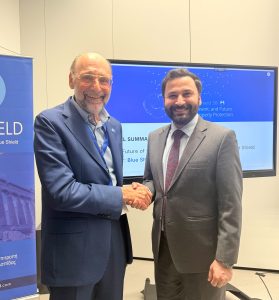

BRISD Chairman highlights Pakistan’s colonial heritage challenges, climate disasters, international humanitarian law and the need for greater developed-country responsibility ahead of COP31 in Türkiye
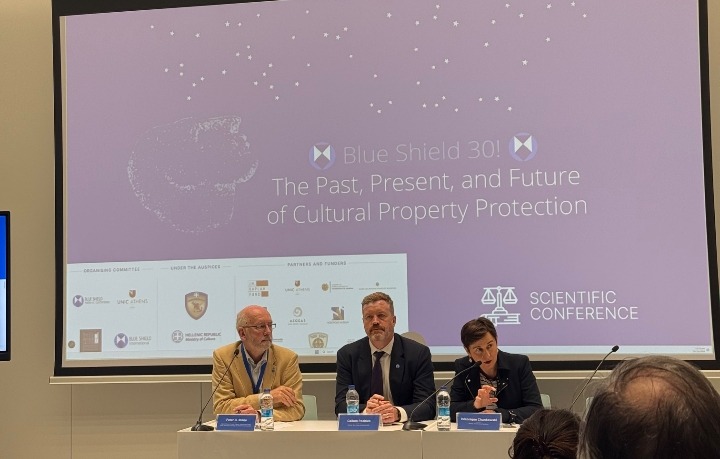
ATHENS, GREECE | 25 October 2026 — Qaiser Nawab, Chairman of the Belt and Road Initiative for Sustainable Development (BRISD), represented Pakistan at the Blue Shield International 30th Anniversary Scientific Conference, held from 24–25 October 2026 at the University of Nicosia’s Athens campus (UNIC Athens), Greece.
The international conference, themed “Blue Shield 30! The Past, Present, and Future of Cultural Property Protection,” brought together cultural heritage specialists, international legal experts, academics, humanitarian practitioners, military professionals and representatives of heritage protection organizations to examine the growing threats to cultural property worldwide.
Participating in discussions throughout the conference, Nawab brought attention to Pakistan’s historical and contemporary experiences, connecting the legacy of British colonialism, cultural property displacement, terrorism, armed conflict, environmental degradation and devastating climate disasters with the broader international responsibility to safeguard humanity’s shared heritage.
Pakistan’s Cultural Heritage and the Legacy of Colonialism
Drawing upon South Asia’s colonial history, Nawab raised concerns regarding the displacement and removal of cultural objects during British colonial rule and emphasized the importance of historical justice, provenance research, international dialogue and appropriate restitution mechanisms.
He highlighted the need for greater engagement between countries of origin, museums, collecting institutions and international organizations to address longstanding cultural heritage disputes.
Nawab argued that protecting heritage should not be confined to preventing damage during contemporary armed conflicts but should also involve addressing historical displacement and strengthening the relationship between cultural identity, historical memory and international cooperation.
Climate Disasters, Pakistan’s Experience and COP31
Climate change and its destructive consequences for cultural heritage formed another central theme of Nawab’s interventions.
Referring to Pakistan’s catastrophic floods in 2022, which affected approximately 33 million people, he highlighted the vulnerability of historic settlements, archaeological monuments, traditional architecture and cultural landscapes.
According to international post-disaster assessments, at least 149 cultural heritage sites suffered damage, including the UNESCO World Heritage properties of Mohenjo-daro and the Historical Monuments at Makli, Thatta.
Nawab emphasized that the destruction of cultural heritage during climate disasters represents far more than the loss of physical structures. It can erase traditional knowledge, community identity, collective memory and historical connections maintained across generations.
Ahead of the 31st United Nations Climate Change Conference (COP31), scheduled for 9–20 November 2026 in Antalya, Türkiye, Nawab called for developed countries to demonstrate stronger commitments to climate finance, adaptation assistance, technology transfer and support for addressing climate-related loss and damage.
He advocated including cultural heritage protection within climate adaptation planning, disaster preparedness programmes and relevant international climate financing mechanisms, particularly for developing countries facing disproportionate climate risks.
He further emphasized the need to recognize the historical responsibility of developed economies while ensuring that vulnerable communities can access practical financial and technical assistance.
International Law, the 1954 Hague Convention and Emerging Threats
The conference examined the importance of the 1954 Hague Convention for the Protection of Cultural Property in the Event of Armed Conflict, its subsequent protocols and the wider international legal framework governing the protection of heritage during conflict.
Nawab contributed perspectives on the continuing challenges of implementation, enforcement and accountability, particularly as contemporary warfare evolves through the increasing use of drones, precision-guided weapons, artificial intelligence and other emerging military technologies.
The discussions also addressed illicit trafficking of cultural objects, restitution following armed conflict, psychological warfare, cultural identity and the responsibilities of military institutions.
Emphasizing the preventive dimension of cultural property protection, Nawab supported greater cooperation between civilian heritage institutions, defence organizations, international legal experts and humanitarian actors.
He also highlighted the importance of education and institutional capacity building to ensure that the protection of cultural sites becomes a practical consideration within military preparedness, peacebuilding and post-conflict recovery.
Sustainable Development and Cultural Heritage Protection
Linking heritage protection with BRISD’s broader sustainable development agenda, Nawab stressed that development policies must incorporate cultural preservation rather than treating heritage as an obstacle to economic progress.
He emphasized the importance of responsible infrastructure development, heritage-sensitive urban planning, environmental safeguards, cultural tourism, community participation and disaster-resilient development.
He further highlighted how the preservation of historic sites and traditional knowledge can contribute to sustainable tourism, local livelihoods, education, social cohesion and long-term economic resilience.
According to Nawab, successful development must protect both present-day communities and the cultural foundations that connect them to their history.
Engagement with Blue Shield International Leadership
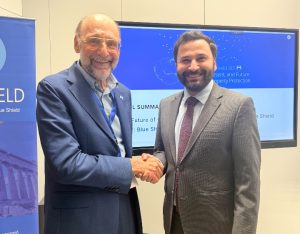
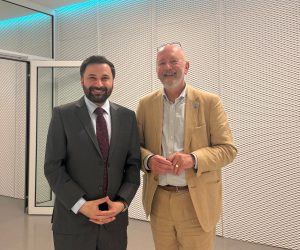
On the sidelines of the conference, Nawab congratulated Alberto Garlandini, the newly elected incoming President of Blue Shield International, and expressed appreciation to outgoing President Professor Peter G. Stone for his leadership and contributions to international cultural property protection.
He also commended Callum Peebles, Director of Blue Shield International, the organizing committee, the Hellenic National Committee of the Blue Shield, UNIC Athens and the wider international team for convening the anniversary conference.
The gathering marked three decades since the establishment of Blue Shield in 1996 and provided an opportunity to reflect on its achievements while considering the organization’s future role in responding to armed conflict, natural disasters and emerging global threats.
Exploring Mediation and Alternative Dispute Resolution
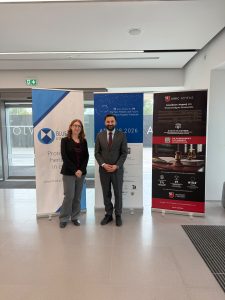
During his visit, Nawab also engaged with the leadership of the School of Law at UNIC Athens, discussing the potential role of mediation and Alternative Dispute Resolution (ADR) in resolving cultural heritage disputes.
The exchange explored how diplomatic dialogue, negotiated settlements, mediation and international legal cooperation could complement existing legal frameworks in matters involving cultural property restitution, competing ownership claims and cross-border cultural cooperation.
The discussion also considered opportunities for strengthening academic dialogue and knowledge exchange at the intersection of law, cultural heritage protection, diplomacy and sustainable development.
Call for Stronger International Solidarity
Nawab concluded his engagement by emphasizing that the protection of cultural heritage requires a more integrated international approach involving governments, civil society, international organizations, academic institutions, local communities and the development sector.
He advocated stronger support for developing countries, investment in preventive conservation, accessible heritage-related climate finance, international legal cooperation and greater public awareness.
His participation highlighted the importance of incorporating perspectives from climate-vulnerable and historically affected countries into global debates on cultural property protection.
The Athens conference underscored a central message reflected in Nawab’s interventions: cultural heritage protection is not only about preserving the past, but also about defending cultural identity, supporting peace, advancing sustainable development and safeguarding the shared inheritance of future generations.
⸻