
Abdul Akram, Managing Director
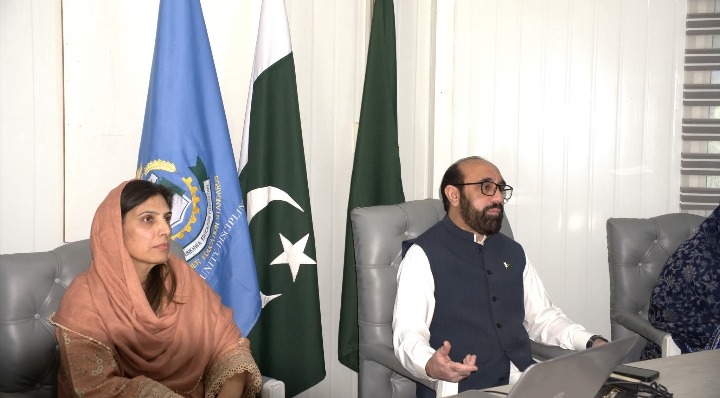
Khyber Pakhtunkhwa Education Foundation (KPEF) / On the directions of Additional Secretary Higher Education Department, KPEF Academy organized a one-day orientation-cum-capacity building seminar.
PESHAWAR:(Special Representative) According to Global times News Agancy Europe,Upon the directives of Mr. Abdul Akram , the Managing Director Khyber Pakhtunkhwa Education Foundation (KPEF) / Additional Secretary Higher Education Department, the KPEF Academy has organized a One-Day Orientation-cum-Capacity-Building Seminar titled “Mandatory Capstone Project in BS Degree Programme and Its Implications” on November 18, 2026 at KPEF Academy (for the BS Level Faculty Staff of Govt. Colleges of Kohat) and on November 19, 2026 at KPEF Office Peshawar (for the BS faculty staff of Govt. Colleges of Peshawar). More than 70, including 45 Female Faculty Staff, have participated. The seminar aimed to orient and equip college faculty with the essential knowledge, practical understanding, and professional skills required for the effective implementation of the mandatory Capstone Project in BS Degree Programmes. The session was conducted by Associate Professor Musarrat Jabeen, Government Postgraduate College for Women, Haripur, who served as the Resource Person.During the three-hour interactive session, the Resource Person comprehensively discussed the concept, rationale, and academic significance of the Capstone Project, emphasizing its role in bridging the gap between theoretical learning and practical application of knowledge. She highlighted how such projects can promote research aptitude, critical thinking, creativity, problem-solving abilities, teamwork, and professional competencies among BS students.The deliberations also covered the identification and selection of discipline-specific project topics, preparation of project proposals, implementation strategies, supervision and mentoring responsibilities of faculty members, research ethics, prevention of plagiarism, and transparent assessment and evaluation mechanisms. Particular emphasis was placed on the practical challenges faced by colleges, institutional preparedness, faculty workload, availability of academic resources, and coordination among Principals, Heads of Departments, and teaching faculty. The seminar provided an interactive platform for faculty members to share their experiences, raise questions, and discuss discipline-specific challenges. Participants also explored practical approaches for implementing Capstone Projects in Government Colleges of KP, including opportunities for collaboration with industries, public-sector organizations and local communities.Mr. Abdul Akram, MD KPEF, during the Concluding Session, informed that KPEF, under its mandate given in Act-III of 1992, within its limited resources, is committed to promote Higher Education across Khyber Pakhtunkhwa. He said that Conventional research is no longer required. He urged the faculty to take initiative in real-time research, for which KPEF has taken the initiative of a series of such orientation cum capacity-building activities throughout the province. The MD, KPEF, also informed about the upcoming programmes of KPEF, including Scholarships to BS-level students of Govt. Colleges, Pre-service trainings of the freshly inducted Lecturers of Higher Education Colleges, Trainings for the Vice-Chancellors, Deans, Directors, Principals and faculty staff of Higher Education Institutions in the province. The seminar concluded with the understanding that the successful implementation of the Capstone Project requires a coordinated institutional approach, effective faculty supervision and a supportive academic environment. It was emphasized that the initiative would contribute towards improving the quality of undergraduate education by making BS graduates more research-oriented, skilled, innovative and better prepared for professional careers and future academic pursuits.KPEF Academy remains committed to strengthening the professional capacity of faculty members and supporting quality enhancement initiatives in higher education through need-based orientation, training, and capacity-building programmes.