
A purposeful step toward establishing
a comprehensive physical rehabilitation system in Balochistan on the model of the Paraplegic Center Peshawar.
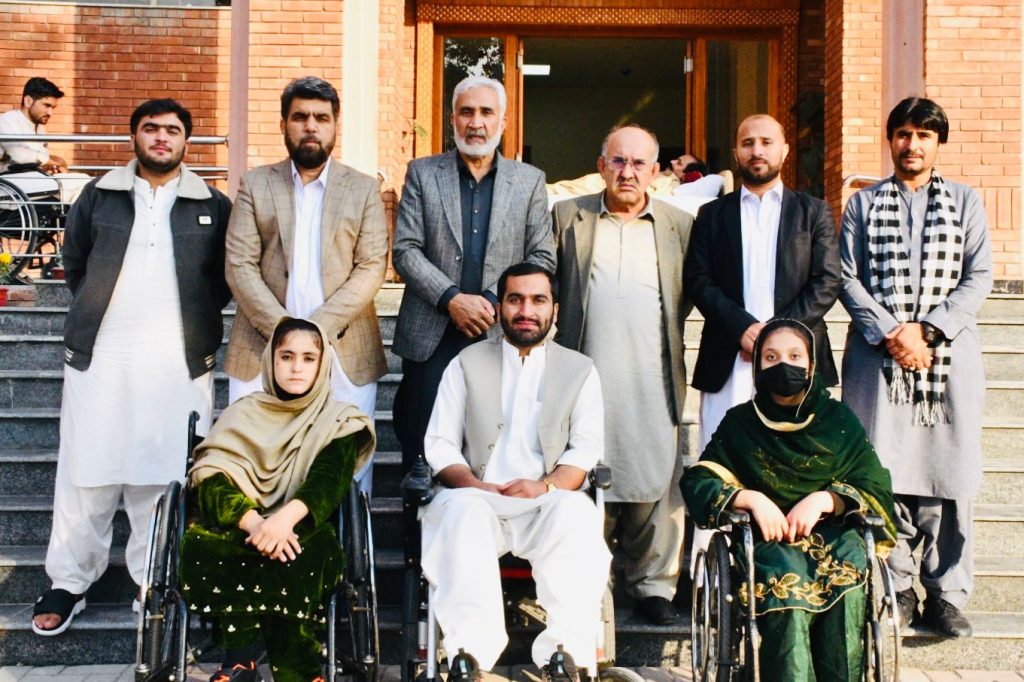
PESHAWAR:(Special Representative)According to Global times News Agancy Europe,At the longstanding wish of Ababeel Tareen, a graduate of the Paraplegic Center Peshawar from Quetta, and on the suggestion of the renowned social activist Mr. Muhammad Anwar Panizai, the Director General Social Welfare Balochistan, Mr. Nasir Dotani, undertook a detailed visit to the Paraplegic Center Peshawar the day before yesterday, under the directives of the Provincial Secretary Social Welfare Balochistan, Mr. Ismatullah Qureshi.The primary objective of this visit was to assess the feasibility, practical aspects, and institutional model for establishing a Comprehensive Physical Rehabilitation Institute in Balochistan—particularly in Quetta—on the lines of the Paraplegic Center Peshawar.This visit reflects a growing realization that disability is no longer viewed merely as a welfare issue, but as a comprehensive medical, social, and developmental challenge, the resolution of which requires integrated policies, robust institutional frameworks, and trained human resources.During the visit, the Chief Executive of the Paraplegic Center Peshawar, Dr. Syed Muhammad Ilyas, gave the delegation a detailed briefing on the background of the institution’s establishment, its vision, governance structure, the practical model of Comprehensive Rehabilitation, and the systematic approaches adopted in physical medicine, physiotherapy, skills development, psychosocial rehabilitation, and in enabling persons with disabilities to become independent and empowered citizens.He clarified that the Paraplegic Center Peshawar model is not limited to treatment alone; rather, it is a complete system centered on rehabilitation, self-reliance, and social inclusion.On the occasion, Dr. Syed Muhammad Ilyas stated that the Paraplegic Center Peshawar is not merely an institution but a mission, aimed at providing persons with disabilities not sympathy, but dignity, skills, and self-confidence. He reaffirmed his commitment that if technical, administrative, or professional support is required for establishing a similar institution in Balochistan, he and his organization would play their role with full integrity and dedication.The presence of graduates of the Paraplegic Center Peshawar belonging to Balochistan during the visit was a clear testament to the practical success of this model.Ababeel Tareen from Quetta, who sustained permanent disability after being injured in an armed attack three years ago, and Baby Asifa from District Dukki, who became disabled after being hit by a stray bullet, represent the reality that even with severe disability, a dignified and active life is possible if timely and comprehensive rehabilitation services are available.The struggles of Ababeel and Asifa serve as practical evidence that the Paraplegic Center Peshawar did not merely provide treatment, but rehabilitated individuals and reintegrated them as productive members of society. This very model is an urgent necessity for a deprived and resource-constrained province like Balochistan.The delegation also held detailed discussions with patients admitted at the center, listened to their experiences, and expressed the resolve that the need to establish a similar comprehensive institution for persons with disabilities in Balochistan would now be pursued at the policy level. The delegation assured that, following consultations with the Chief Secretary Balochistan and the Chief Minister of Balochistan, Mr. Mir Sarfraz Bugti, concrete steps would be taken in this regard.In conclusion, Dr. Syed Muhammad Ilyas thanked the delegation for their visit and stated that when state institutions enter the social sector with vision, sincerity, and professional integrity, the outcomes are not confined to institutions alone but transform the lives of entire generations. He described this visit as a positive and hopeful development for persons with disabilities in Balochistan.